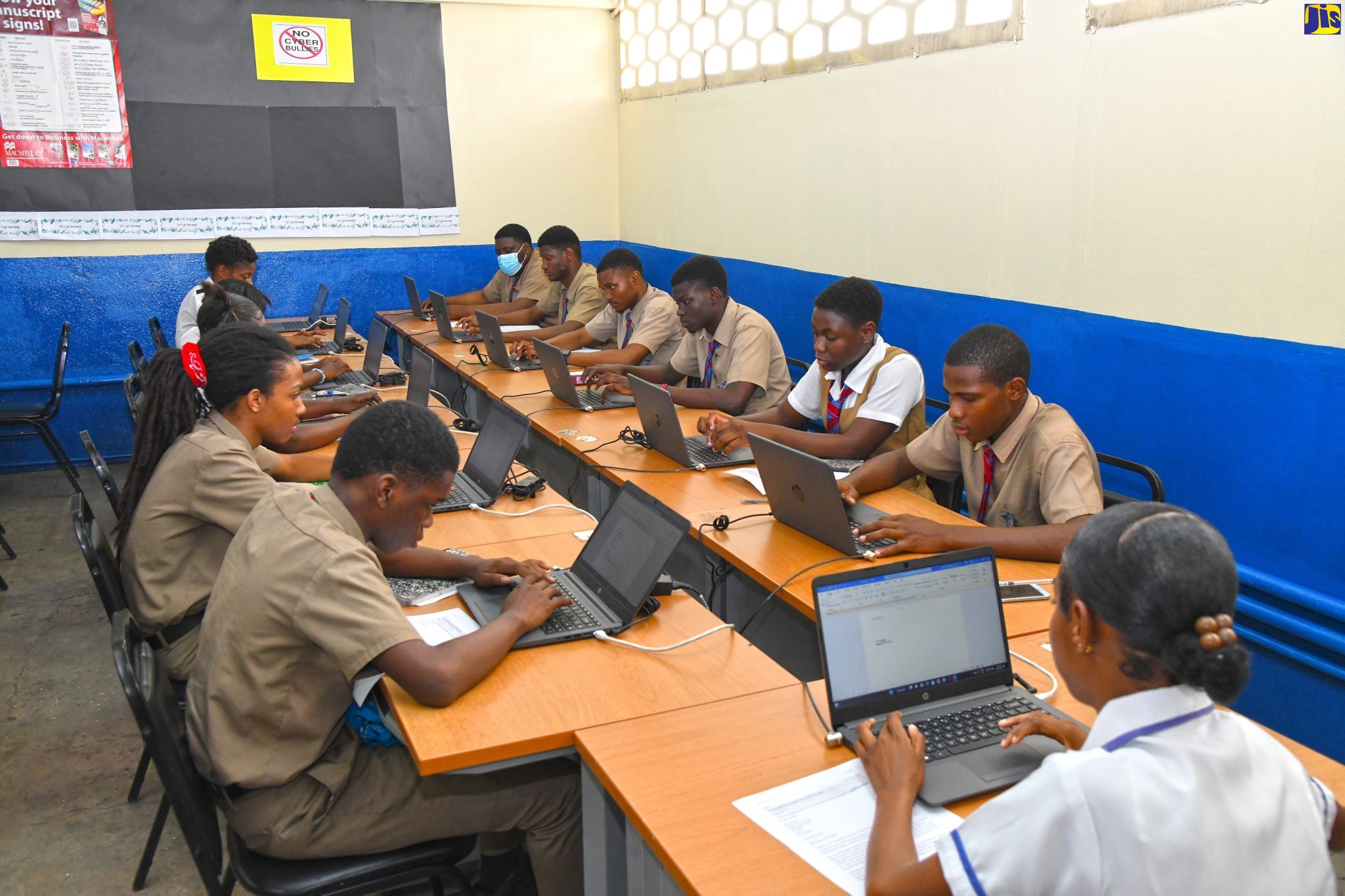
Students Solving Real-World Problems
Through School2School™ partnerships, students use STEM Literacy to address hurricane-related challenges facing Jamaican communities.
See STEM Literacy in Action
Watch how students from U.S. and Jamaican schools collaborate on real-world STEM projects, building critical skills while addressing Hurricane Melissa challenges.
School2School™ STEM Projects in Action
Students collaborating across borders to solve real problems
What is STEM Literacy?
STEM Literacy is defined as the 4Cs + 2Ps—Creativity, Critical Thinking, Communication, Collaboration, Problem-Finding, and Problem-Solving—the essential skills for thriving in an AI-driven world.
Creativity
Critical Thinking
Communication
Collaboration
Problem-Finding
Problem-Solving
Hurricane Relief Projects by Category
Students identify problems, design solutions, and implement projects that make real impact
Clean Water & Sanitation
Designing filtration systems, rainwater harvesting, and water quality testing solutions
Students designed low-cost solar water purifiers using UV sterilization and activated carbon filters. Prototypes tested in both schools, adapted for Jamaican materials.
STEM Literacy Skills:
Created web app calculating optimal rain barrel placement and capacity based on roof size, rainfall data, and household needs. Includes Jamaican parish-specific data.
STEM Literacy Skills:
Students developed low-cost water testing kit using pH strips, turbidity tubes, and bacterial culture methods. Kit detects contamination from sewage, chemicals, and debris after flooding. Includes smartphone app for data logging and community mapping of safe water sources.
STEM Literacy Skills:
Resilient Shelter & Infrastructure
Engineering hurricane-resistant structures and rapid-deployment emergency housing
Students analyzed roof failure patterns from Hurricane Melissa, designed low-cost reinforcement kits using locally available materials. Created installation guides for community workshops.
STEM Literacy Skills:
Students engineered low-cost building blocks using locally abundant bamboo fiber mixed with concrete. Blocks are 30% stronger than standard concrete, use 40% less cement, and leverage Jamaica's bamboo resources. Created manufacturing process teachable in community workshops.
STEM Literacy Skills:
Collaborative design competition for rapid-assembly emergency shelters using bamboo, tarps, and rope. Winning designs tested in both locations for climate adaptability.
STEM Literacy Skills:
Communication & Connectivity
Building resilient communication networks for disaster response and recovery
Designed SMS-based alert system for hurricane warnings, evacuation routes, and resource distribution. Works on basic phones, no smartphone required.
STEM Literacy Skills:
Students built low-power mesh radio network using Raspberry Pi and LoRa modules. System operates without internet, allows school-to-school emergency communication.
STEM Literacy Skills:
Students built low-cost weather stations using Arduino, measuring temperature, humidity, barometric pressure, wind speed, and rainfall. Data uploaded to shared database creates real-time hurricane tracking and early warning system. Stations cost under $50 each using locally available parts.
STEM Literacy Skills:
Sustainable Energy
Developing renewable energy solutions for schools and communities
Students designed neighborhood-scale solar micro-grids with battery storage, serving 10-15 homes each. System continues operating during grid outages, prioritizes critical loads (medical equipment, refrigeration, communication). Includes training program for local installation and maintenance.
STEM Literacy Skills:
Students designed modular solar charging stations for phones, laptops, and medical devices. Units include battery backup for nighttime use and cloudy days.
STEM Literacy Skills:
Created bicycle-powered generators for emergency lighting and phone charging. Students calculated power output, designed efficient gear ratios, built prototypes.
STEM Literacy Skills:
Food Security & Agriculture
Creating sustainable food systems resilient to climate disruption
Students designed flood-resistant aquaponics systems combining fish farming and hydroponic vegetables. Systems use elevated tanks, backup aeration, and rapid drainage to survive flooding. Produces protein (tilapia) and vegetables year-round with 90% less water than traditional farming. Designed for easy disassembly before hurricanes.
STEM Literacy Skills:
Students built low-cost soil sensors measuring pH, moisture, and nutrients. Created mobile app for farmers to track soil health and optimize planting schedules.
STEM Literacy Skills:
Designed space-efficient vertical gardens using recycled materials (PVC pipes, bottles). System includes drip irrigation, grows leafy greens and herbs in limited space.
STEM Literacy Skills:
Health & Wellness
Addressing public health challenges in post-disaster environments
Students designed peer support network connecting trauma-affected students across schools. Includes trained peer counselors, resource guides, and virtual support groups.
STEM Literacy Skills:
Students designed low-cost delivery drones for transporting medical supplies, blood samples, and medications to remote areas cut off by flooding or damaged roads. Drones use GPS waypoint navigation, can carry 5 lbs up to 10 miles, and land autonomously. System includes ground stations at 15 rural health clinics.
STEM Literacy Skills:
Created virtual reality first aid training simulations for hurricane-related injuries. Low-cost VR using smartphones and cardboard viewers, works offline.
STEM Literacy Skills:
How STEM Literacy Projects Work
A structured process that turns student curiosity into real-world impact
Students connect with Jamaican partners to identify urgent needs and challenges facing their community after Hurricane Melissa.
Using DTIP™, students from both schools collaborate to research, ideate, and prototype solutions using locally available materials.
Prototypes are tested in both locations, gathering feedback from users. Students refine designs based on real-world performance.
Successful solutions are deployed in Jamaican schools and communities. Students document and share their work with other schools.
The Eight Dimensions of Learning
School2School™ engages all eight dimensions through authentic disaster relief work. This is STEM Literacy—the reunification of human intelligence that industrial education fractured.
2Ps: Problem-Finding, Problem-Solving
Students encounter real Hurricane Melissa devastation—not textbook exercises. They see actual photos, read news reports, and connect with affected students.
Students ask: How can we help? What do they really need? How do we deliver impact? Questions drive learning, not predetermined answers.
Teams design campaigns, coordinate with Jamaican partners, engage families, and leverage diverse strengths to achieve shared goals.
Science (water quality), math (budgeting), economics (duty-free imports), geography (disaster zones), writing (appeals)—all integrated naturally.
Work matters to real people. Helping actual Jamaican students return to school creates genuine motivation and accountability.
Build cross-cultural relationships while honoring both communities' assets, identities, and ways of knowing.
Connect local school capacity to Jamaica's specific recovery needs, creating meaningful bridges between communities.
Supportive environment where students can try, fail, learn, and grow without fear—essential for creativity and risk-taking.
STEMbedding™ Eight-Phase Process
Students move through eight iterative phases, engaging all dimensions of learning at each step
Challenge
Identify authentic problem
Explore
Research context and constraints
Discover
Uncover root causes
Analyze
Evaluate potential solutions
Ideate
Generate creative approaches
Create
Build prototypes and campaigns
Evaluate
Test and gather feedback
Iterate
Refine and improve
This framework isn't theory—it's how students actually work when solving real problems. School2School™ provides the authentic context where STEM Literacy naturally emerges.